
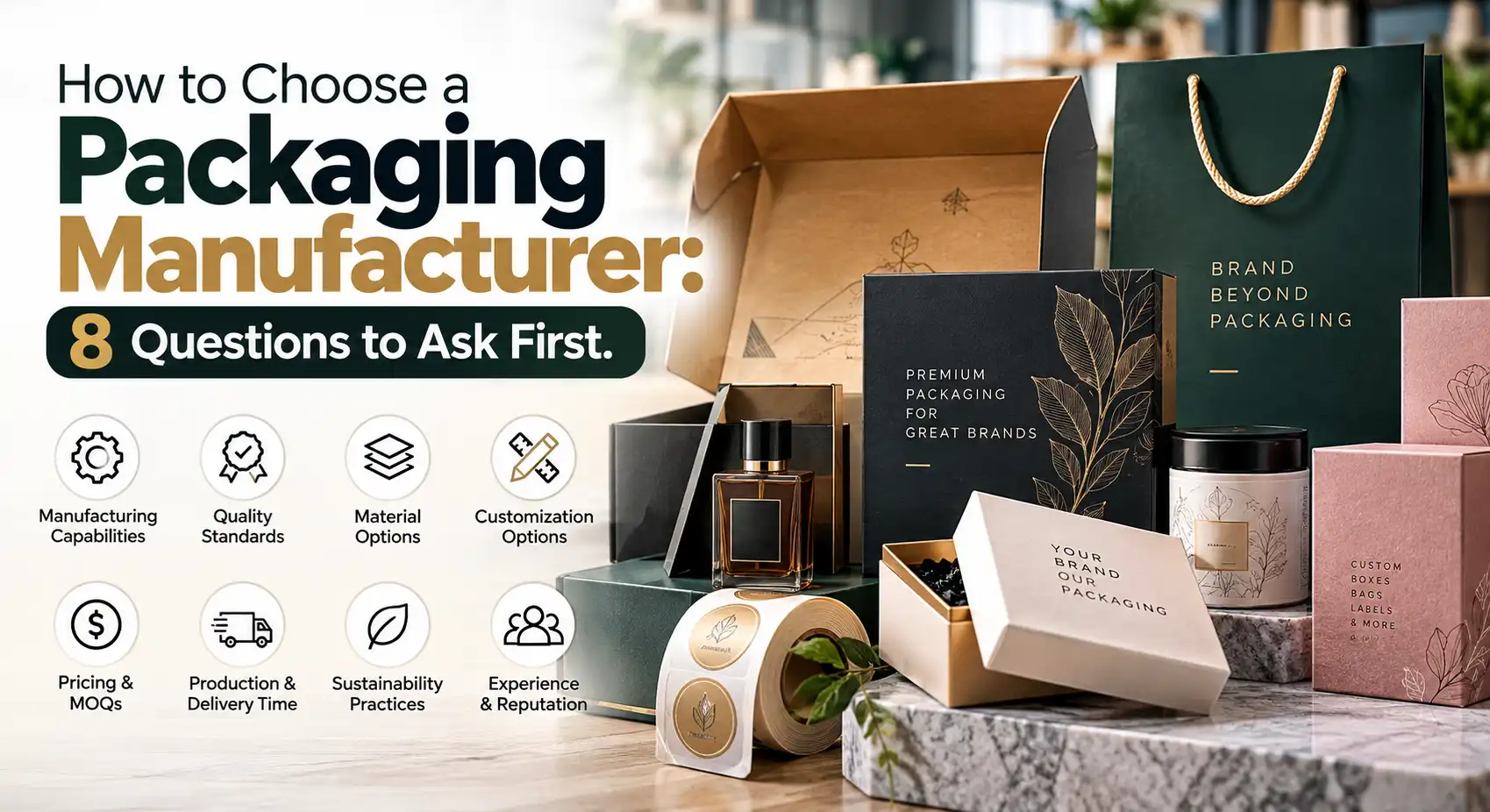
Choosing a packaging supplier is a bigger decision than it looks like at first — it’s not just a one-time purchase, it’s a relationship you’ll likely repeat every time you reorder, launch a new product, or need a design tweak. A supplier that’s slow to answer questions before you’ve even placed an order is unlikely to get faster once they have your money. Here are the eight questions worth asking before you commit, and what the answers actually tell you.
1. “What’s your minimum order quantity?”
This single question filters out a large share of suppliers immediately if you’re a smaller or newer brand. Many manufacturers require minimums in the thousands of units, which makes sense for their production efficiency but can be a real barrier if you’re testing a new product or don’t want to tie up cash in inventory. Ask this first — it’s the fastest way to know if a supplier is even a fit for your current stage.
2. “Do you offer free design support, or is that a separate cost?”
Some suppliers expect print-ready artwork and charge extra (or simply can’t help) if your file isn’t correctly formatted. Others include basic design and pre-press support as part of the ordering process. If you don’t have an in-house designer, this answer matters more than it might seem — it’s the difference between a smooth first order and a frustrating back-and-forth over file specifications you don’t fully understand.
3. “Will I see a physical or digital proof before production runs?”
A proof — ideally one you actively approve, not just a file you’re told will be “checked internally” — is your last chance to catch a color, sizing, or layout issue before it’s printed on your full order. Any supplier who skips this step, or treats it as optional, is putting the risk of a costly reprint on you instead of catching it before production.
4. “What’s your realistic production timeline, not your best-case timeline?”
Ask specifically for the timeline from proof approval to shipment, not from “order placed” — the two are different, and the gap between them is often where communication happens slowest. A supplier who gives you a vague or overly optimistic timeline upfront is more likely to miss it than one who gives you a specific, realistic window.
5. “How do you handle a mistake if one happens on your end?”
Every manufacturer has an error occasionally — a color that’s slightly off, a shipment that’s late. What separates a good supplier from a bad one isn’t whether mistakes happen, it’s whether they have a clear, fair process for addressing them when they do. A supplier who can answer this clearly and confidently (rather than getting defensive) is usually one who’s dealt with it professionally before.
6. “Can I order a smaller test batch before committing to a full production run?”
This question tells you two things: whether the supplier can flexibly accommodate different order sizes, and how confident they are in their own quality — a supplier reluctant to let you test a small batch first may be worried about what a close inspection would reveal.
7. “What happens if I need to reorder later — is my file and spec saved?”
Reordering should be simple if you’re working with the same supplier again. Ask whether they keep your dieline, artwork files, and material specifications on file so a reorder doesn’t require resubmitting everything from scratch.
8. “Can you tell me about a project similar to mine that you’ve produced before?”
This is less about getting a specific case study and more about gauging whether the supplier actually understands your product category, or is giving you generic answers regardless of what you’re packaging. A supplier who can speak specifically to your industry’s common packaging needs (fragility, shelf presence, compliance requirements, whatever’s relevant to your product) is more likely to catch problems before they become expensive mistakes.
Frequently Asked Questions
Should I choose the cheapest quote I receive?
Not automatically. Compare quotes on an apples-to-apples basis first (same material, quantity, and finish across every quote) before comparing price, since a lower number is often the result of a lower-spec quote, not a better deal. Also weigh the answers to the 8 questions above — a slightly higher price from a supplier with a clear proofing process and realistic timeline is often the better long-term choice.
How many suppliers should I get quotes from before deciding?
Two or three is usually enough to get a sense of the market rate and to compare communication style and responsiveness — asking more than that mostly adds time without adding much additional insight.
Is it a red flag if a supplier can’t answer these questions clearly?
Generally, yes. A supplier who can’t clearly explain their minimum order policy, proofing process, or timeline before you’ve placed an order is unlikely to communicate more clearly once you have.
