
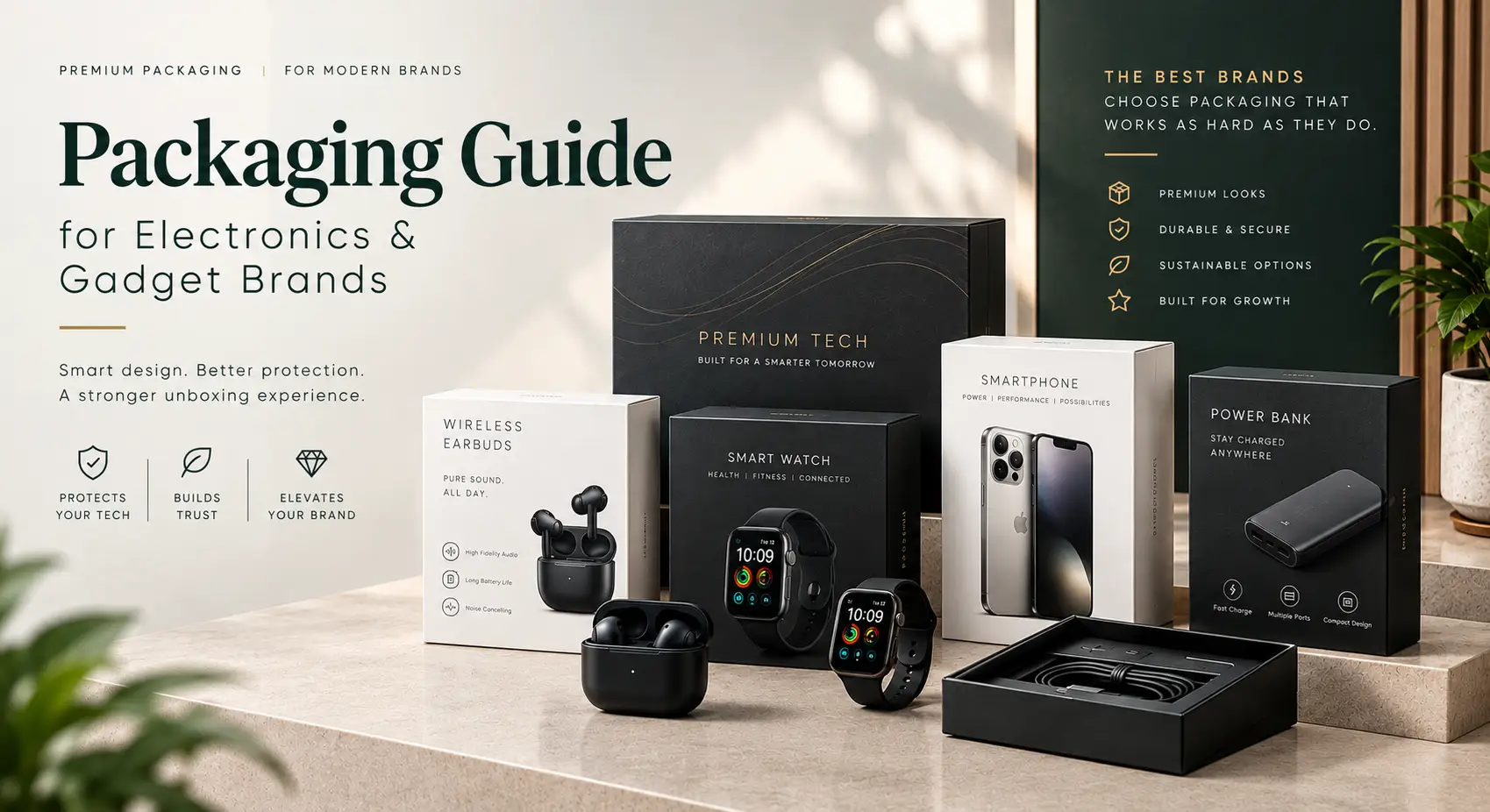
Packaging Guide for Electronics & Gadget Brands
Electronics packaging has to solve a problem most other categories don’t face in the same way: the product itself is often rigid, has specific weight distribution, and can be damaged by impact in ways that aren’t always visible from the outside of the box. At the same time, electronics buyers — especially for premium accessories and gadgets — have come to expect an unboxing experience closer to what cosmetics or luxury goods deliver. This guide covers how to balance protection with presentation for electronics and gadget packaging.
Start With Protection, Then Layer in Presentation
The single most common mistake in electronics packaging is designing for the unboxing photo before confirming the structural protection is right. Get the protection decision right first — presentation choices (finish, closure style, print detail) can be layered on top of a structurally sound box, but a beautiful box that doesn’t protect the product properly leads to damage claims and returns, which cost far more than a slightly less premium finish would have.
Two structural questions matter most:- Does the product have sharp edges, exposed connectors, or components that could shift during shipping? If so, an insert (foam, molded pulp, or die-cut corrugated) isn’t optional — it’s the main thing standing between your product and a damage claim.
- What’s the shipping distance and handling path? A product shipping direct-to-consumer through standard parcel carriers experiences more handling impact than one going to a single retail location in a pallet shipment. Plan wall strength around the actual shipping path, not a generic assumption.
Rigid Boxes: The Standard for Premium Accessories
For premium electronics accessories — headphones, smartwatches, chargers positioned as gift-worthy, and similar products — rigid boxes are the most common choice, largely because the structural rigidity of the board itself does double duty: it protects the product and it signals the price point before the box is even opened.
Magnetic closure rigid boxes are especially common in this category because they combine a secure, tamper-resistant close with the “premium unboxing” moment that’s become an expected part of the buying experience for higher-price-point gadgets — a large share of unboxing content for tech accessories specifically features this closure style.
Insert design matters as much as the outer box for electronics. A rigid box with a poorly fitted foam or molded insert doesn’t protect meaningfully better than a plain shipping box — the insert needs to be cut to the product’s actual dimensions, not a generic size, to prevent movement during transit.
Art Card Boxes: The Practical Choice for Lighter Accessories
Not every electronics product needs rigid packaging. For smaller, lighter accessories — cables, cases, small peripherals — art card boxes offer strong print quality at a lower cost and lower weight than rigid packaging, which also keeps shipping costs down on a category where margins are often tighter than in cosmetics or apparel.
C2S (“coated two sides”) art card is worth specifically considering for electronics packaging with a window cutout — a common design choice in this category, since customers often want to see the actual product before buying, especially for anything with a visual design element (case colors, cable finishes).
Corrugated: Shipping and Bulk Protection
For the outer shipping layer — whether you’re shipping direct-to-consumer or in bulk to a retailer — corrugated boxes with the right flute and wall strength are what actually gets your product there intact, regardless of how premium the inner packaging is.
| Product Type | Recommended Corrugated Spec |
|---|---|
| Small accessories, cables, single small gadgets | Single-wall, E or B-flute |
| Standard electronics shipping (headphones, chargers, mid-size gadgets) | Single or double-wall, C-flute |
| Larger or higher-value electronics, longer transit routes | Double-wall with custom foam or die-cut inserts |
| Bulk/wholesale shipments to retail | Double or triple-wall, partitioned |
Partition inserts and custom die-cut corrugated trays are particularly valuable for electronics shipped in multi-unit cartons, since they prevent product-to-product contact that can scratch finishes or damage components during transit.
Frequently Asked Questions
Do I need a rigid box for my electronics accessory, or is art card enough?
It depends on your price point and product weight. Lighter accessories at a lower price point are usually well-served by art card packaging. Higher-price-point accessories, or anything positioned as gift-worthy, typically benefit from the added structure and perceived value of a rigid box.
How do I know what insert my product needs?
Send us your product’s dimensions and weight distribution when you request a quote — we can recommend foam, molded pulp, or die-cut corrugated insert options based on your product’s specific shape and fragility.
Can I get a sample of the packaging before ordering a full production run?
There’s no minimum order quantity, so you can start with a smaller test run to check fit and protection before scaling up to a full production order.
Ready to package your electronics or gadget product?
Get a free quote — tell us your product dimensions, weight, and shipping method, and we’ll recommend the right structure and insert combination.
